

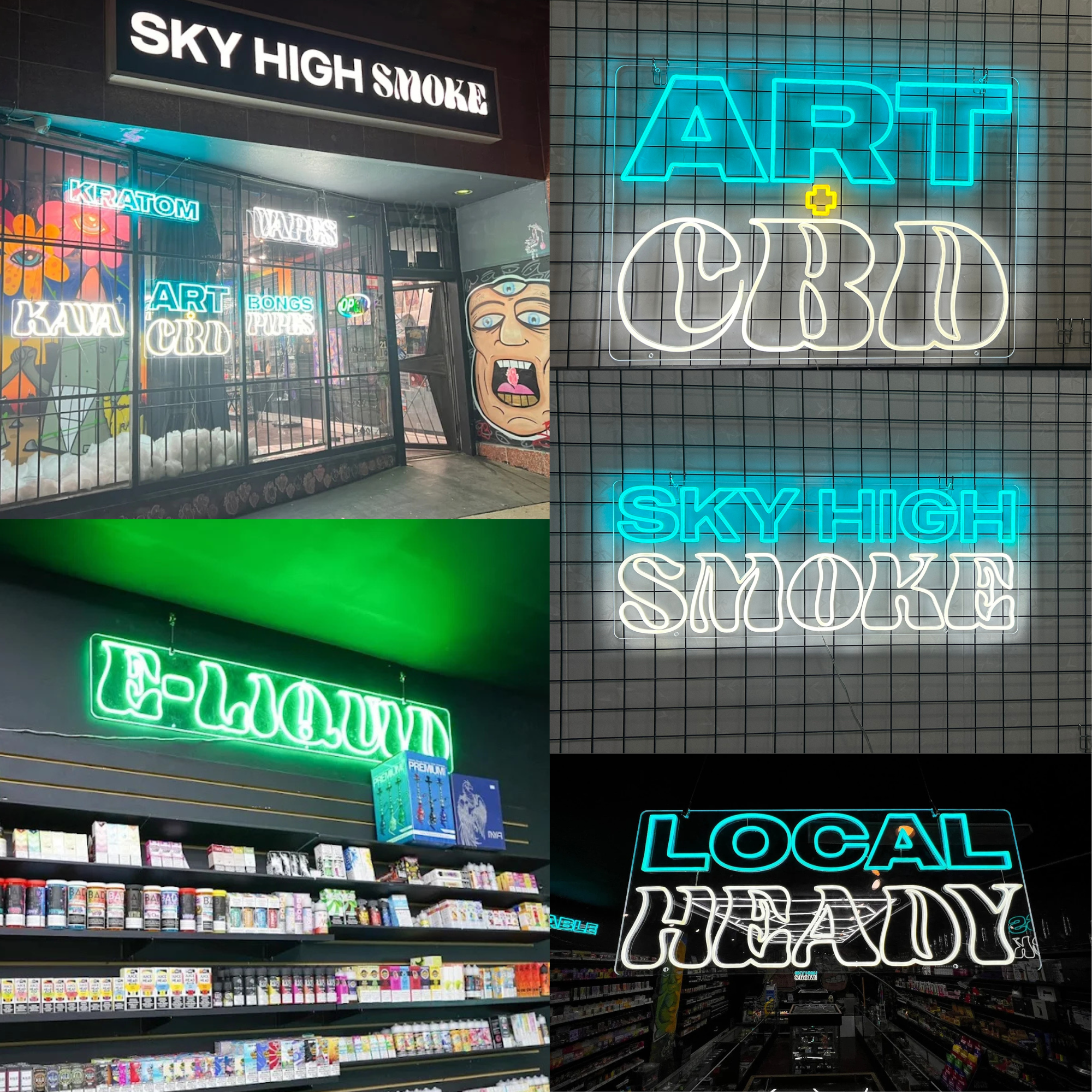
"Neon" can mean two very different products. Traditional neon is hand-bent glass tubing filled with gas and powered by a high-voltage transformer. LED neon uses LED strips inside a flexible silicone or acrylic housing to create a similar glow. Both can look great. They differ in how they are built, installed and maintained, and each has situations where it is the better pick.
We make LED neon, so we have a point of view. This guide tries to lay out the trade-offs fairly so you can choose what fits your project.
Quick comparison
| LED neon | Traditional glass neon | |
|---|---|---|
| Look | Smooth, even glow; very close to glass neon, especially in solid colors | The original glow, with a depth and warmth many people love |
| Build | LED strips in silicone or acrylic, usually mounted on a backing | Hand-bent glass tubes, often mounted on stand-offs or a raceway |
| Durability | Flexible and hard to break; suits busy spaces and shipping | Glass can crack or break if hit or dropped |
| Power | Low voltage (typically 12V), plugs into a normal outlet | High-voltage transformer; installation often involves an electrician |
| Heat | Runs cool | Tubes and transformers get warm |
| Energy use | Generally lower for a similar size | Generally higher |
| Colors and effects | Single colors, RGB color-changing and animated options; dimmable | Color set by gas and glass; animation is possible but more complex |
| Repairs | Damaged sections are usually replaced | A skilled glass bender can repair or re-gas tubes |
| Lead time and shipping | Lightweight and easy to ship | Fragile to ship; often made and installed locally |
| Upfront cost | Usually lower for the same size | Usually higher, especially for complex designs |
When LED neon is the better fit
- Home decor and gifts. Safer around kids and pets, lighter to hang, and plugs into any outlet.
- Weddings and events. Easy to transport, set up and take home afterward.
- Logos and detailed designs. LED neon can follow complex shapes and pair with printed backings.
- Color-changing or animated signs. RGB and addressable LEDs make this simple.
- Busy spaces. Bars, gyms, salons and retail stores where a sign might get bumped.
- Shipping anywhere. LED neon travels well.
When traditional glass neon makes sense
- Restoration and heritage projects. Historic buildings, vintage signs and places where authenticity matters.
- Art pieces. Some artists and collectors want the specific glow and craft of glass.
- Repairable long-term installations. If you have a local neon shop, glass signs can be repaired and re-gassed for many years.
- Matching an existing neon look. If the rest of a space uses glass neon, new pieces may need to match.
Questions to ask before you choose
- Where will the sign hang, and will it be outdoors or in direct weather?
- How will it be powered, and is there an outlet nearby?
- Will anyone touch or bump it?
- Do you need color-changing, dimming or animation?
- Does your city, landlord or historic district have sign rules?
- Do you want the option to repair the sign locally in the future?
- What is your timeline and budget?
Our take
For most home, event and small business signs, LED neon is the more practical choice: easier to install, safer to handle and simpler to ship. For restoration work, fine art or projects where the authentic glass glow is the point, traditional neon is worth it, and a local neon shop is the right partner.
Not sure which you need? Send us a photo of your space and your idea. We will tell you honestly whether LED neon is a good fit. Get a free quote and mockup, or read our neon sign size guide.


